
The Modern Restaurant Menu: What Guests Expect Before They Even Order
By Ciandra Smit ·
A customer’s experience at a restaurant doesn’t begin when their food reaches the table.
It often starts much earlier.
They may discover your restaurant on social media, search for your menu online, check your prices, look at photos of your dishes, or simply ask themselves whether you have something they’ll actually want to eat. By the time they walk through the door, they may already know what they’re going to order.
That means a modern restaurant menu has an important job to do before a customer ever sits down.
Today’s guests expect menus to be easy to access, simple to understand, accurate and convenient. For restaurants, cafés and hotels, meeting those expectations can make a noticeable difference to the whole dining experience.
Your Menu Is Part of Your First Impression
Your food might be the main attraction, but your menu is one of the first things customers interact with.
A confusing layout, outdated prices, missing information or poor-quality images can make a business look less organised than it really is.
On the other hand, a clear, well-presented menu immediately gives customers confidence.
It tells them what you offer, what it costs and what kind of experience they can expect.
For hotels, the menu can matter even more. Guests may be deciding what to order from room service, where to have dinner, or whether the hotel’s café suits their needs.
Your menu is effectively an extension of your brand, so it should look and feel like the rest of your business.
Customers Want Information Quickly
People are used to finding information instantly.
If someone wants to know whether a restaurant serves vegetarian dishes, they expect to find that out without asking three different members of staff.
The same applies to prices, ingredients, portion options, drinks, desserts and special offers.
A good menu shouldn’t make customers work unnecessarily hard.
Clear menu categories and short, honest menu descriptions let guests quickly find what they’re looking for and decide with confidence. Good photos help too: sometimes seeing a dish is what makes someone choose it.
This is particularly useful during busy periods, when staff may not have time to answer every question straight away.
Digital Menus Don’t Have to Mean Complicated Menus
The phrase “digital menu” can make restaurant owners think of complicated technology or expensive systems.
It doesn’t have to be that way.
At its simplest, a digital menu is about making your restaurant’s information easier for guests to access and easier for your team to manage.
A customer can scan a QR code, open the menu on their phone and browse the options without waiting for a physical menu to arrive. A good QR code menu should load quickly and be easy to read on a small screen, with no app to download first.
For the business, the advantage is being able to manage that information without printing an entirely new set of menus every time something changes.
The technology should work in the background.
The customer should simply experience a menu that works.
And not every guest wants to use their phone at the table. Keeping a few printed copies available, or simply having staff happy to talk guests through the menu, means nobody feels left out.
Your Menu Can Help Customers Discover More
A physical menu has limited space.
Once the pages are printed, that’s essentially what you have until the next print run.
A digital menu gives businesses more flexibility.
You can showcase specials, seasonal dishes, drinks, desserts, recommended combinations or other items you want customers to notice.
This doesn’t mean turning your menu into an advertisement.
It’s about making it easier for customers to discover everything your business offers.
Someone who planned to order only a main course might notice a dessert they hadn’t considered. A guest ordering coffee might discover a seasonal pastry. A hotel guest browsing the room-service menu might notice another dining option on the property.
Sometimes customers simply need to see something before they consider ordering it.
Accuracy Matters More Than Most Businesses Think
Imagine a customer sees a dish on your menu that sounds perfect.
They order it.
Then the server explains that it’s no longer available.
Or perhaps the price shown isn’t current.
Or the ingredients have changed.
These situations can seem insignificant, but they create friction.
Customers don’t necessarily know why the information is wrong. They simply know that the menu told them one thing and the restaurant told them another.
Keeping your menu accurate is therefore more than an administrative task. It’s part of maintaining customer trust, and an up-to-date menu is one of the easiest ways to protect it.
Different Customers Have Different Needs
Not everyone approaches a menu in the same way.
Some guests want to know exactly what’s in a dish. Others immediately look for vegetarian or vegan choices. Someone with a food allergy may need clear allergen information before they feel comfortable ordering.
International visitors may also appreciate menus that are easier to understand, particularly in hotels and restaurants in tourist destinations.
A well-structured digital menu gives businesses more room to provide useful information, such as dietary labels and allergen details, without making the physical dining environment feel cluttered.
The goal isn’t to overwhelm customers with information.
It’s to give them access to the information they need, when they need it.
Menus Should Work for Staff Too
A good menu doesn’t only serve customers.
It should make life easier for your employees as well.
When menu information is clear and current, staff spend less time correcting misunderstandings and answering questions the menu could have answered.
This becomes especially valuable when new employees join the team.
Instead of relying entirely on staff memorising every change, the menu itself can give customers accurate information.
That allows your team to focus on hospitality rather than constantly explaining the basics.
One Menu Can Become Many
Restaurants and hotels rarely have just one thing to communicate.
You might have a main menu, drinks menu, breakfast menu, dessert menu, children’s menu, room-service menu or seasonal menu.
Managing all of these separately can quickly become frustrating.
A central digital system makes the process much easier by giving you one organised place to manage your menus and update information as needed.
For businesses with multiple locations, this becomes even more valuable.
Instead of treating every menu as a completely separate project, management gains far more control over the information customers see.
The Future of Menus Is About Convenience
The purpose of a modern restaurant menu isn’t to replace hospitality.
It’s to support it.
Customers still want recommendations from knowledgeable staff. They still want a welcoming atmosphere. They still want beautifully prepared food and genuine service.
Technology simply removes some of the unnecessary friction around the experience.
A customer should be able to access your menu easily.
Your staff should be able to trust the information on it.
And management should be able to make changes without turning a simple menu update into a major project.
That’s where a modern menu management system can make a real difference.
Give Your Menu the Attention It Deserves
Your menu may only be a few pages, or a screen on someone’s phone, but it plays a much bigger role in your business than its size suggests.
It’s a sales tool, an information source, a customer-service resource and an extension of your brand.
Keeping it accurate and easy to use shouldn’t require hours of administrative work.
Restocarte gives restaurants, cafés, hotels and bars a simple way to manage their digital menus and keep customers connected to the most current information. Guests open your menu by scanning a QR code or tapping an NFC tag, with no app to install. You can organise it into clear categories, show dietary and allergen labels, match it to your own colours and fonts, and change a price, add a seasonal special, update a dish or hide one that has sold out in seconds. The goal is simple: make menu management easier so your team can spend more time focusing on the guest.
Because your customers shouldn’t have to wonder whether your menu is up to date.
They should be able to trust it.
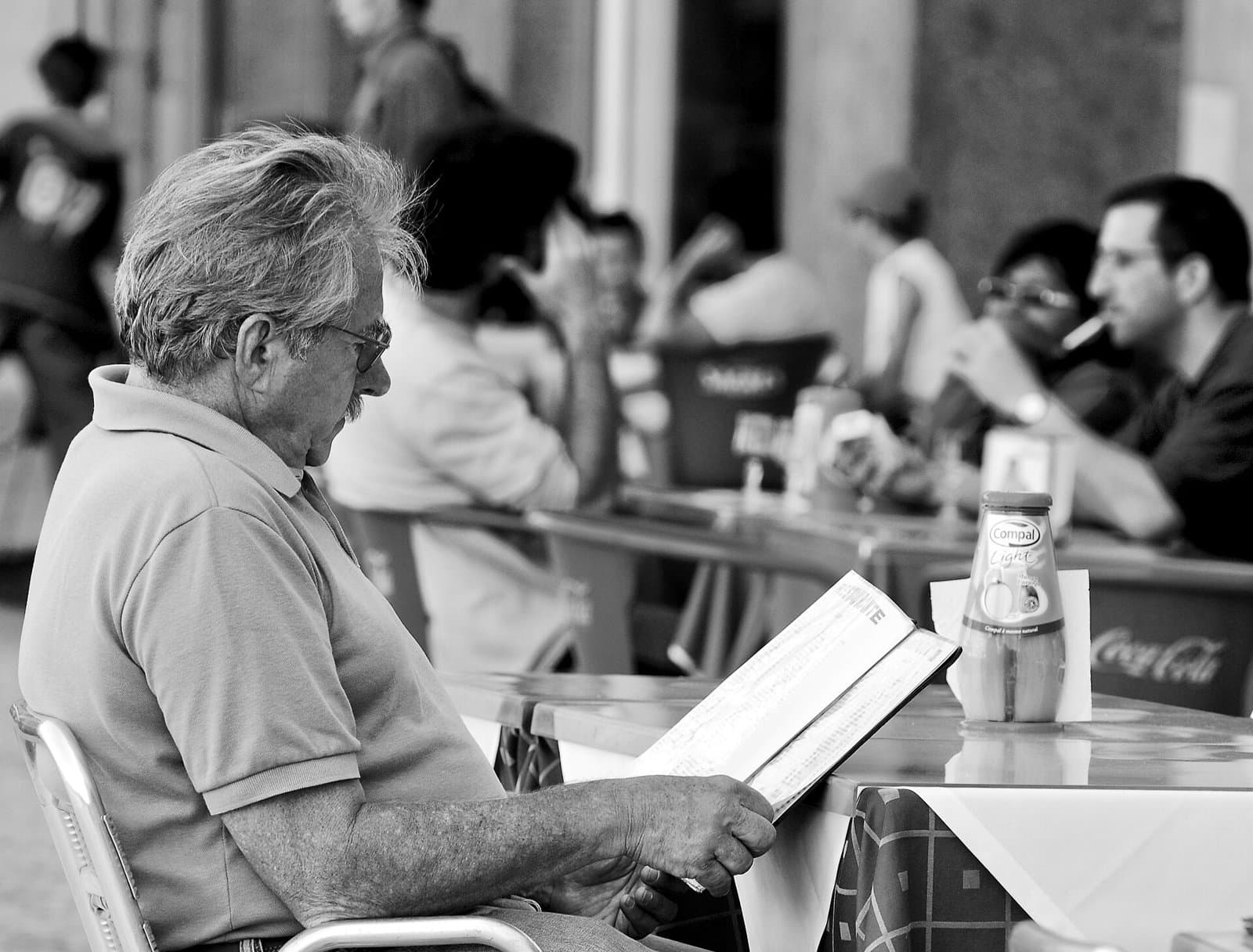
Cover photo: Pedro Ribeiro Simões, “Reading the restaurant menu”, Rossio, Lisbon, via Flickr / Wikimedia Commons, CC BY 2.0.